Why Your Disc Isn’t Cutting Residue Like It Used To
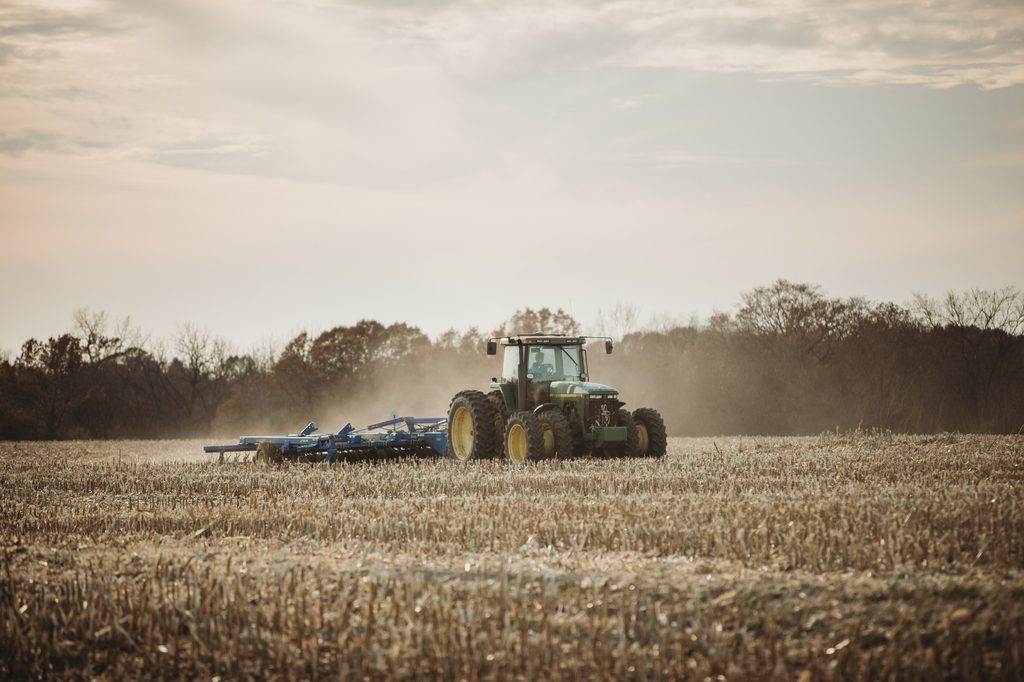
Harvest leaves plenty behind. Corn stalks, soybean stems and other crop residue can create a serious challenge for fall tillage -especially when a disc that used to slice cleanly through residue suddenly seems to be riding over it instead.
When that happens, it’s easy to blame field conditions or heavy residue. But sometimes the problem is much simpler: your disc blades aren’t performing the way they used to.
Before adding another pass or making major equipment adjustments, it’s worth taking a closer look at the parts actually doing the cutting.
Heavy Residue Puts Disc Blades to the Test
Not all residue presents the same challenge. Corn typically leaves considerably more biomass behind than soybeans, and corn stalks also break down more slowly. That makes residue management particularly important in continuous corn and other high-residue situations.
Recent guidance from NC State Extension notes that tandem discs are commonly used in heavy-residue crops such as corn. Scalloped or notched disc blades can provide additional cutting and chopping action when residue levels are high, while smooth disc blades are often suited to more typical soil conditions and leveling applications. (1)
The challenge is that the performance you saw when a blade was new won’t necessarily continue throughout its service life.
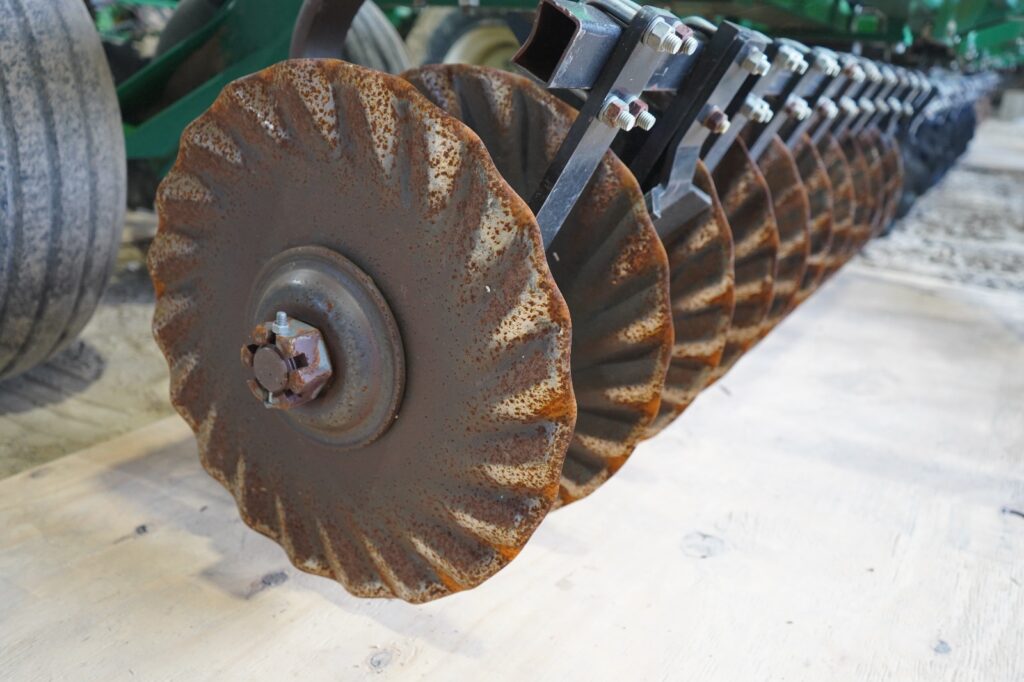
A Worn Edge Changes the Way a Disc Works
Disc blades are ground-engaging wear parts. Every acre puts the blade in contact with soil, residue, rocks and other abrasive material.
Over time, the blade loses diameter and its cutting edge becomes worn. Eventually, instead of slicing cleanly through stalks and residue, the blade may begin pushing, crimping or riding over material.
An Iowa State University field demonstration provides a good example. Researchers evaluating tillage options in extremely heavy corn residue found that a tandem disc with dull blades was ineffective at chopping much of the residue. Many stalk pieces longer than 24 inches remained after the pass. Researchers identified dull blades, insufficient implement weight and slower operating speed as factors working against the disc’s cutting performance. (2)
That means poor residue cutting isn’t automatically a reason to replace the entire implement. Start with the wear parts.
Field Conditions Matter
Blade condition is only part of the equation. Soil moisture, implement setup, operating depth, speed, blade angle and available down pressure can all influence how effectively a blade penetrates the soil and cuts residue.
That’s especially important because the goal isn’t necessarily to eliminate residue. Crop residue plays an important role in protecting the soil surface. University of Minnesota Extension recommends considering both the amount and durability of residue when selecting a tillage approach, noting that corn produces more biomass and its residue breaks down more slowly than soybean residue. (3)
The objective is to get the residue management you want from your tillage system without making extra passes simply because the first one didn’t perform as expected.
And those extra passes have a cost. University of Minnesota Extension reported in spring 2026 that reducing disking depth from six inches to four inches lowered measured fuel use from 0.32 to 0.23 gallons per acre, a 28% reduction. (4) If worn blades require greater depth, more aggressive settings or another trip across the field to accomplish the same job, the cost of delaying replacement can start adding up.
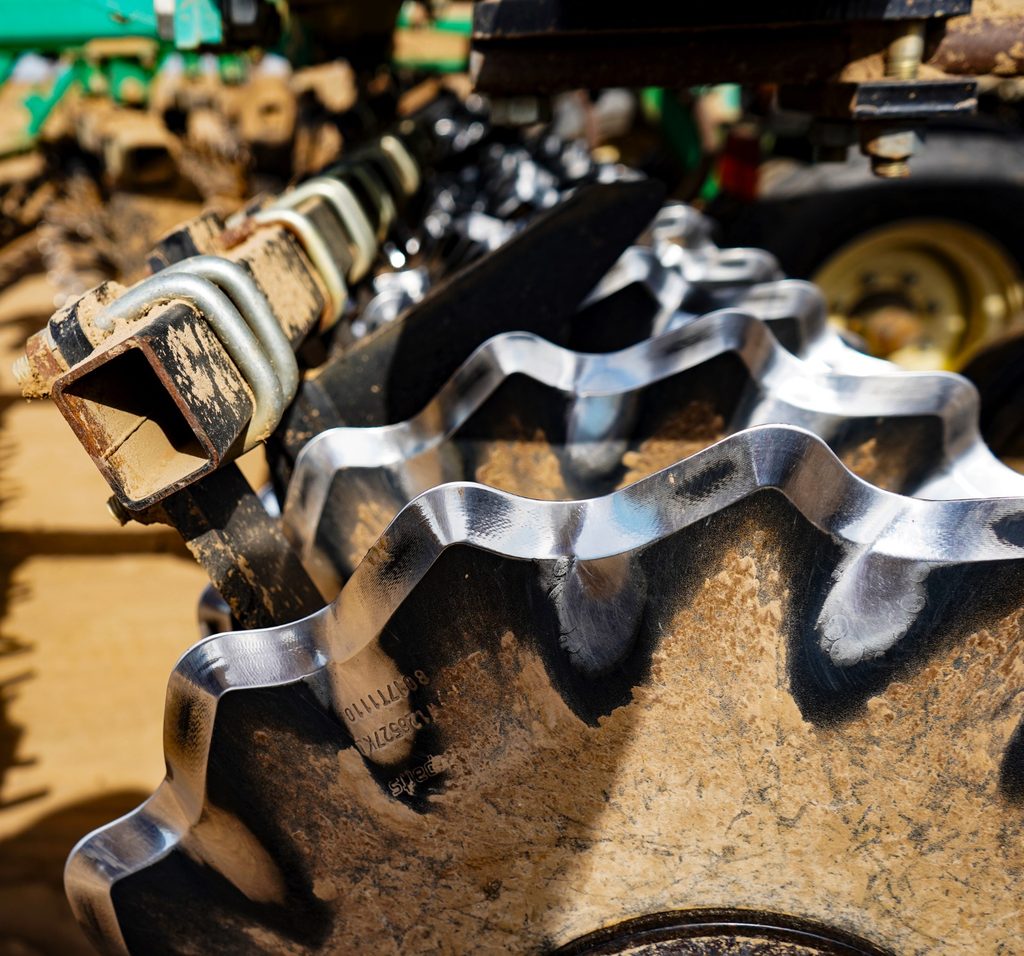
Check Your Blades Before Fall Tillage
Before heading into heavy fall residue, inspect your disc blades for:
- Reduced diameter compared with the original specification
- Rounded, dull or uneven cutting edges
- Chips, cracks or other visible damage
- Uneven wear across the implement
- Loose or worn bearings and hubs
- Blades that aren’t penetrating or cutting residue consistently
Also consider how the machine performed the last time it was in the field. If you’re seeing longer pieces of residue, inconsistent cutting or areas where the implement seems to ride over stalks, worn blades may be contributing to the problem.
Make Every Fall Pass Count
Fall fieldwork already comes with a limited window. Spending more time, fuel and labor trying to compensate for worn tillage components doesn’t make that window any bigger.
Wearparts disc blades are manufactured from high-quality boron steel and engineered for consistent wear and long service life. With replacement blades available to fit a wide range of popular tillage equipment, you can replace worn components before they become a field-performance problem.
Before you blame the residue, take a look at the blade. A fresh cutting edge may be all your disc needs to get back to work.
Sources
(1) NC State Extension. Disk Tillage (Disking). Updated May 20, 2026.
https://soilmanagement.ces.ncsu.edu/tillage-management/disk-tillage/
(2) Iowa State University Extension and Outreach. Tillage Options for Unharvestable Corn.
https://crops.extension.iastate.edu/post/tillage-options-unharvestable-corn
(3) University of Minnesota Extension. Tillage Implements: Purpose and Ideal Use.
https://extension.umn.edu/soil-management-and-health/tillage-implements-purpose-and-ideal-use
(4) University of Minnesota Extension. Tillage Economics: Spring 2026. April 15, 2026.
https://blog-crop-news.extension.umn.edu/2026/04/tillage-economics-spring-2026.html